Welcome to the 1st article of our 3 part series on Bone Density.
(1) Understanding Bone Density
(2) Top 11 Bone Building Exercises
(3) Bone Density Nutrition & Supplementation.
By Julia Kachianos
What is Bone Density?
Bone density, or bone mineral density (BMD), refers to the amount of bone mineral in bone tissue. Our bone density is an important indicator of bone strength and overall skeletal health. High bone density typically suggests strong bones, while low bone density is linked to increases in the risk of fractures and osteoporosis.
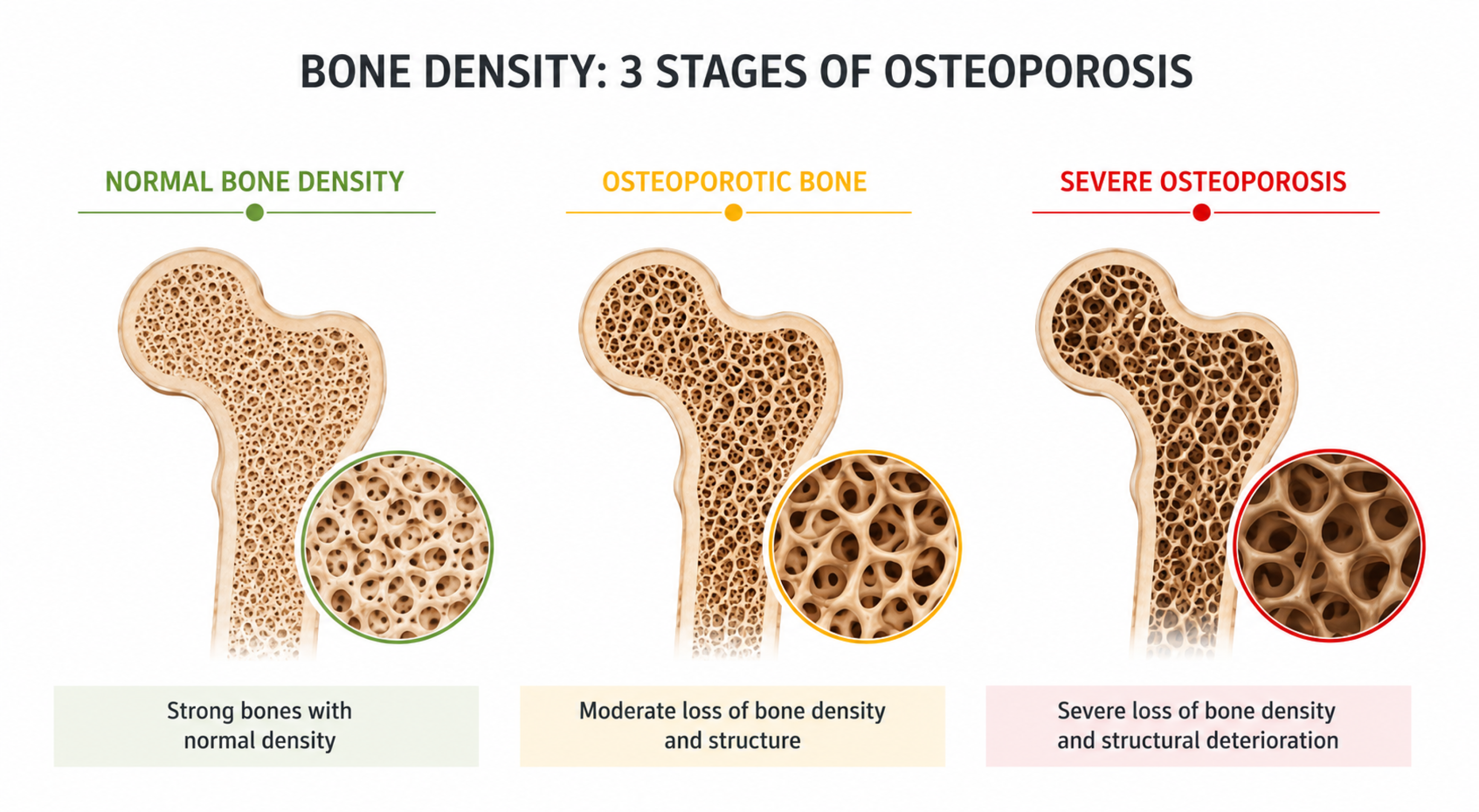
The body continuously remodels bone through a balance of bone formation (osteoblast activity) and bone resorption/breakdown (osteoclast activity). When the breakdown of our bones outpaces the formation of new bone, our bone mass will decrease, potentially leading to osteopenia and osteoporosis. Osteopenia is a below average bone density, while osteoporosis is a more severe reduction in bone mass that is associated with brittle bones and a higher fracture risk.
Reduced bone density significantly increases the risk of injuries such as hip, wrist, and spinal fractures, especially after minor falls or impacts.
As we age, the balance between bone building and breakdown shifts unfavorably. Bone density naturally declines over time, particularly due to hormonal changes. Estrogen, for example, plays a protective role in bone health. Menopausal women experience a dramatic drop in estrogen levels, which accelerates this bone loss.
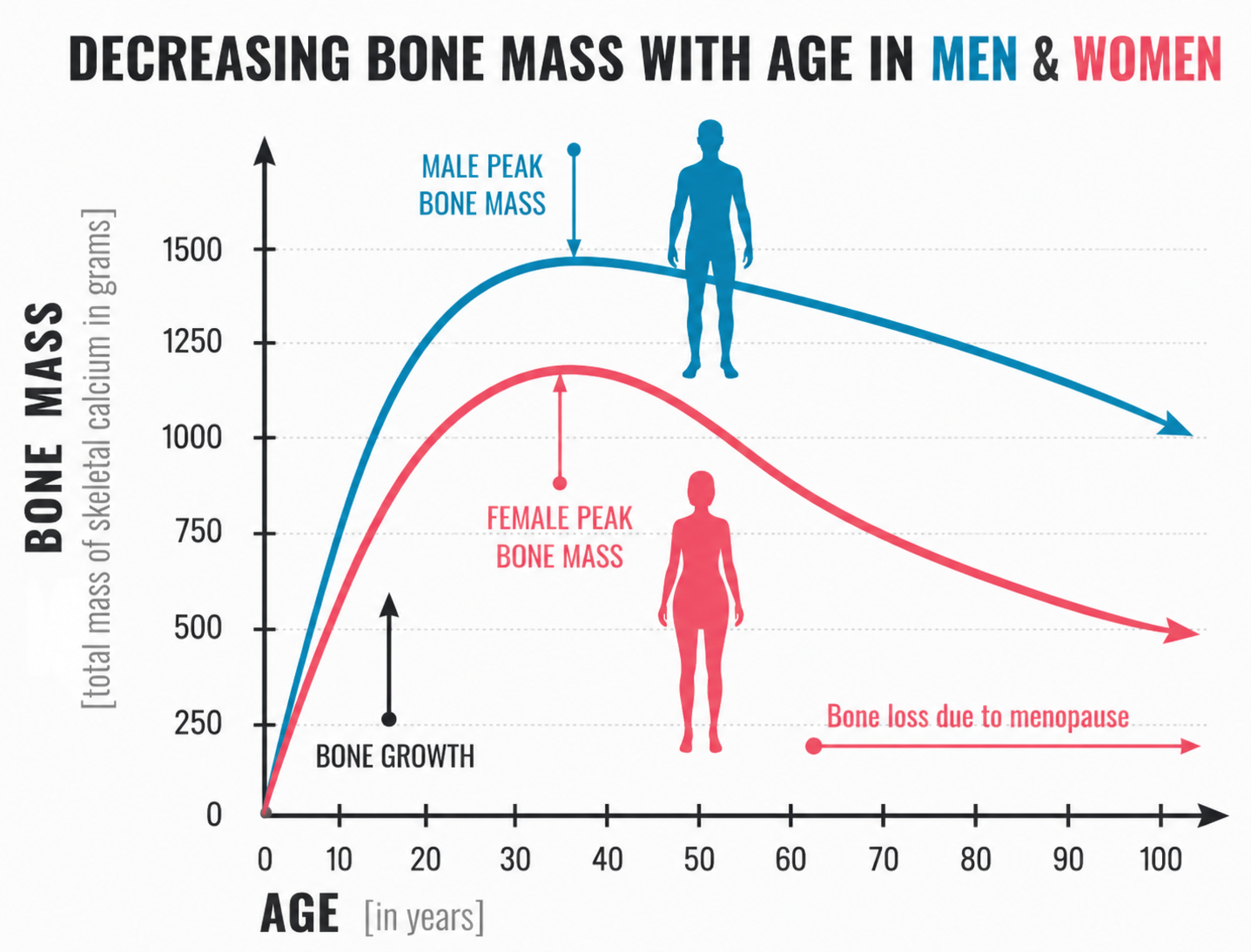
According to Dr. Stacy Sims, an exercise physiologist and nutrition scientist that specializes in women’s health, states in her book “Next Level” that some women may lose up to 20 percent of their bone density within the first 5-7 years postmenopause. Men also experience bone loss with age, though slightly more gradually.
As we continue through this article, if this sounds like you and you would be interested, TrainSMART Personal Fitness can give you exercises to combat aging and especially preservation of bone density!
Outpace Age with Intelligence, Strategy, Commitment, and Care.
At TrainSMART, we specialize in creating safe, customized programs designed to build muscle and bone, burn fat, increase strength, enhance balance, boost energy levels, and improve cognitive function. As experts in longevity, our intelligent strategies are crafted with your unique needs in mind. Through unwavering commitment and personalized care, we believe you can feel better and stronger than you did 20 years ago.
Take the first step toward a more vibrant, energetic you.
CALL or TEXT (716) 650 0535 today and let’s outpace age Together!
How is Bone Density measured?
The most common method to measure bone density is through a DEXA scan (Dual-energy X-ray Absorptiometry). This non-invasive test uses low-dose X-rays to assess BMD at fracture-prone sites - such as the hip and spine. A DEXA scan provides a T-score, which compares your bone density to that of a healthy young adult, with zero (0) being normal. The more negative the number, the weaker the bones and therefore the higher the risk of fracture.
- T-score ≥ -1.0: Normal bone density
- T-score between -1.0 and -2.5: Osteopenia
- T-score ≤ -2.5: Osteoporosis (assuming no other reason for a low T-score)
DEXA scans are not the sole diagnosis tool for osteoporosis. Those over the age of 50 that have had a fracture of the spine, hip, wrist, shoulder, rib, and/or pelvis are more likely to have osteoporosis. A spinal or hip fracture is indicative of osteoporosis, however, regardless of one’s T-score. Especially in older adults, fractures with major trauma (such as a car accident) can be a sign of osteoporosis.
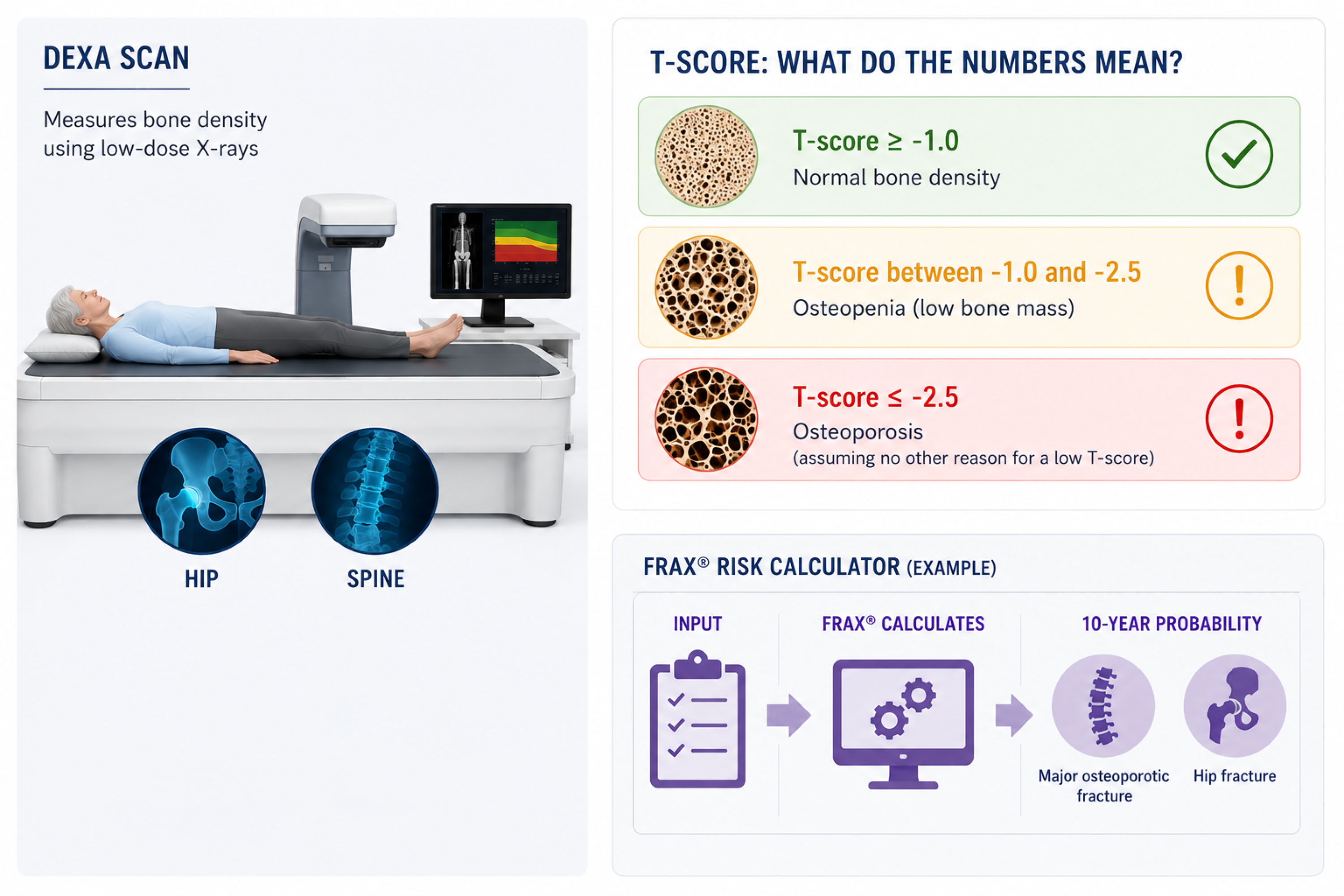
There is also a risk calculator called FRAX (as seen above), which is included in DEXA software, but is more accessible and can be found online. One may input their information (age, sex, height, weight) and answer a few questions (as shown to the left). The FRAX software will calculate the chances of having certain fractures within the next 10 years. Using FRAX, if the 10-year probability of a major osteoporotic fracture (spinal, hip, shoulder, forearm fracture) is over 20% or over 3% for a hip fracture, then an osteoporosis diagnosis may be made. Use this link to calculate your FRAX score.
So, who should get tested?
DEXA tests are available through most hospitals and clinics; referrals can often be obtained from primary care providers.
At-risk Populations:
- Women over the age of 65
- Post-menopausal women
- Men over the age of 70
- Those who’ve experienced a bone fracture after 50 years of age
- Women with risk factors between the ages of 50-64
- Men with risk factors between the ages of 50-69
Osteoporosis Risk Factors:
- Family history of osteoporosis and/or fracture
- Frequent falling
- Smoking
- Excessive alcohol use
- Low body weight
- Vitamin D deficiency
- Malabsorption
- Certain medications (e.g. Prednisone).
Warning Signs to look out for:
- Decreased height
- Stooped posture
- Sudden back pain
- Fractures from minimal trauma
Often we only get tested when it is too late. Most individuals will begin to lose bone density around age 35, but don’t start testing their bone density until age 50 – and even that is considered early. It’s never too early to make an investment in your health, and in this case – exercise is the best medicine.
Final Takeaways
Bone density plays a critical role in maintaining skeletal health and overall quality of life. Through appropriate assessment, consistent strength-based activity, and tailored interventions, individuals can significantly improve or simply maintain their bone mass. Early prevention, education, and regular exercise are essential in the fight against osteoporosis and related injuries.
Stay tuned for our next article as we discuss specific safe strength training exercises that can help build bone density. Better yet, that can be performed and coached here at TrainSMART Personal Fitness!
Related Articles
July 21, 2026
Bone Density Nutrition & Supplementation
Welcome to the 3rd article of our 3 part series on Bone Density.
(1) Understanding Bone Density
(2) Top 11 Bone Building Exercises
(3) Bone Density Nutrition & Supplementation.
July 10, 2026
Top 11 Bone Building Exercises and Osteoporosis Prevention
Welcome to the 2nd article of our 3 part series on Bone Density.
(1) Understanding Bone Density
(2) Top 11 Bone Building Exercises
(3) Bone Density Nutrition & Supplementation.